The Conflict Early Warning and Response Mechanism (CEWARN)
of the Intergovernmental Authority on Development (IGAD)
The conflict Early Warning and Response Mechanism (CEWARN) is an initiative of the Inter-governmental Authority on Development (IGAD), designed to serve the region as a mechanism that systematically anticipates and responds to violent conflicts in a timely and effective manner.

IGAD’s decision to establish CEWARN at its 8th Summit in 2000 followed from its revitalization in 1996 and the expansion of its mandate to cover Peace and Security as well as broader development issues. It was also based on IGAD’s realization that timely intervention to prevent the escalation or to mitigate the worst effects of violent conflicts is more effective and would also prove much cheaper both in terms of human and material resources than dealing with full-blown crises.
The Protocol agreement to establish CEWARN was signed by the Council of Ministers of IGAD in January 2002 and entered into force in August 2003. The CEWARN office was officially opened in Addis in June 2003.
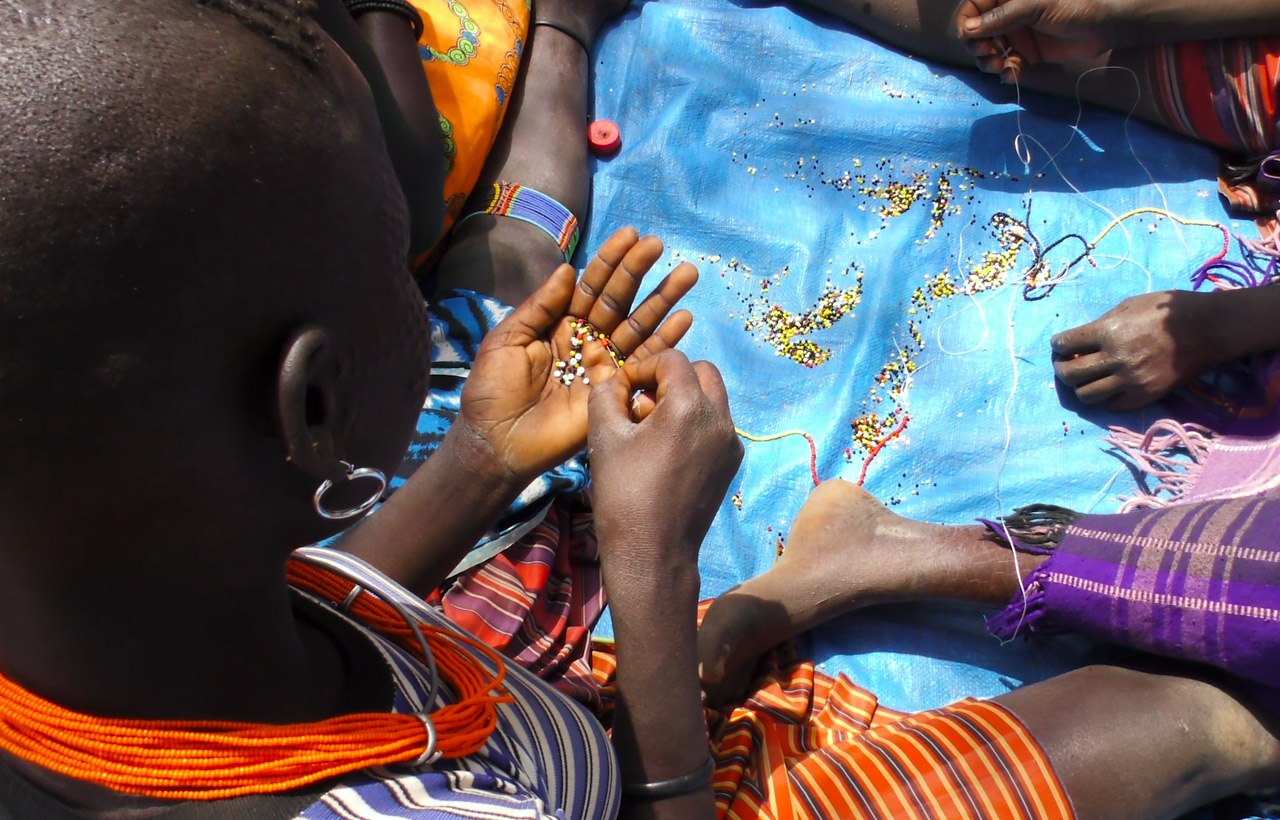
A pastoralist in the Karamoja Cluster
CEWARN’s vision is embodied in the tagline, Stakeholders Empowered to Prevent violent conflicts! Accordingly, its mission is to establish itself as an effective and sustainable sub-regional mechanism that undertakes conflict Early Warning and Early Response and fosters cooperation among relevant stakeholders in order to respond to potential and actual violent conflicts in the region in a timely manner.
Although the Horn of Africa is a region that is ravaged by conflicts that range from intra-state and Inter-state to cross border community conflicts, CEWARN has adopted an incremental approach initially focusing exclusively on pastoralist conflicts – of both inter-communal and cross-border nature - before expanding to other types of conflicts in due course.
Since its establishment, the CEWARN through its network of Field Monitors, Country Coordinators, National Research Institutes and Conflict Early Warning and Response Units (CEWERUs) at the national level, has been monitoring and reporting on pastoralist conflicts in two pilot areas: the Somali cluster (that incorporates parts of Kenya, Ethiopia and Somalia) and the Kamaroja cluster (that incorporates parts of Ethiopia, Kenya, Sudan and Uganda).
In this regard, CEWARN has played an important role in bringing to light the severity of previously unmonitored death and destruction relating to pastoralist conflicts. Between 2003- 2006, CEWARN has recorded almost 2,200 conflict-related deaths and the loss of around 138,000 livestock in more than 1,500 incidents in these pilot areas.
CEWARN has recorded marked success in fulfilling its mandate: “ to receive and share information concerning potentially violent conflicts as well as their outbreak and escalation in the IGAD region, undertake analysis of the information and formulate options for early response.”
Its achievements so far include:
· CEWARN has established itself as a sub-regional mechanism with the most developed data-based regional Early Warning System in Africa
· It has developed an effective state-of-the -art field monitoring and data analysis tool
· It has brought to light hitherto unrecognized extent of violence in the pilot pastoralist areas
· It has conducted capacity building for Conflict Prevention, Management and Response (CPMR) in the region through skill training of stakeholders at various levels
· It has managed to build confidence and collaboration amongst various stakeholders including governments, CSOs and CBOs
CEWARN recognizes, however, that there exist gaps in its early years of operationalization including the lack of an effective response component for the mechanism and the need to expand its information base and areas of reporting to cover all member states.
In this regard, CEWARN has developed a five-year strategy (2007-2011) to fill in these gaps and be able to play its role as an effective and sustainable sub-regional mechanism for Conflict Early Warning (EW) and Early Response (ER).
The areas of focus of the five-year strategy include expansion of its information base as well as areas of reporting to cover all member states; strengthening the Early Response side of the mechanism; strengthening the institutional and functional capacity of the mechanism; developing a public relations and communications strategy to enhance awareness on CEWARN’s work as well as implementing a sustainable long term funding strategy.
CEWARN is funded from regular member states’ contribution as well as the support of partners in development such as the German Agency for Technical Cooperation (GTZ) and US Agency for international Development (USAID)
Copyright 2007 CEWARN
About CEWARN
About RRF
Reports
Employment
People
Reporter Login
Related Links
Upcoming Events
Contact Us
Intergovernmental Authority on Development Member States
Overview
Overview
About CEWARN | About RRF | Reports | Employment | People | Reporter Login | Related Links | Upcoming Events | Contact Us